
Luxury Real Estate Dubai 2026: Prime Market Data & Analysis
Dubai's prime and super-prime market in 2026 — where growth actually was, price per square foot by location, supply constraint, and how prime differs from mainstream.
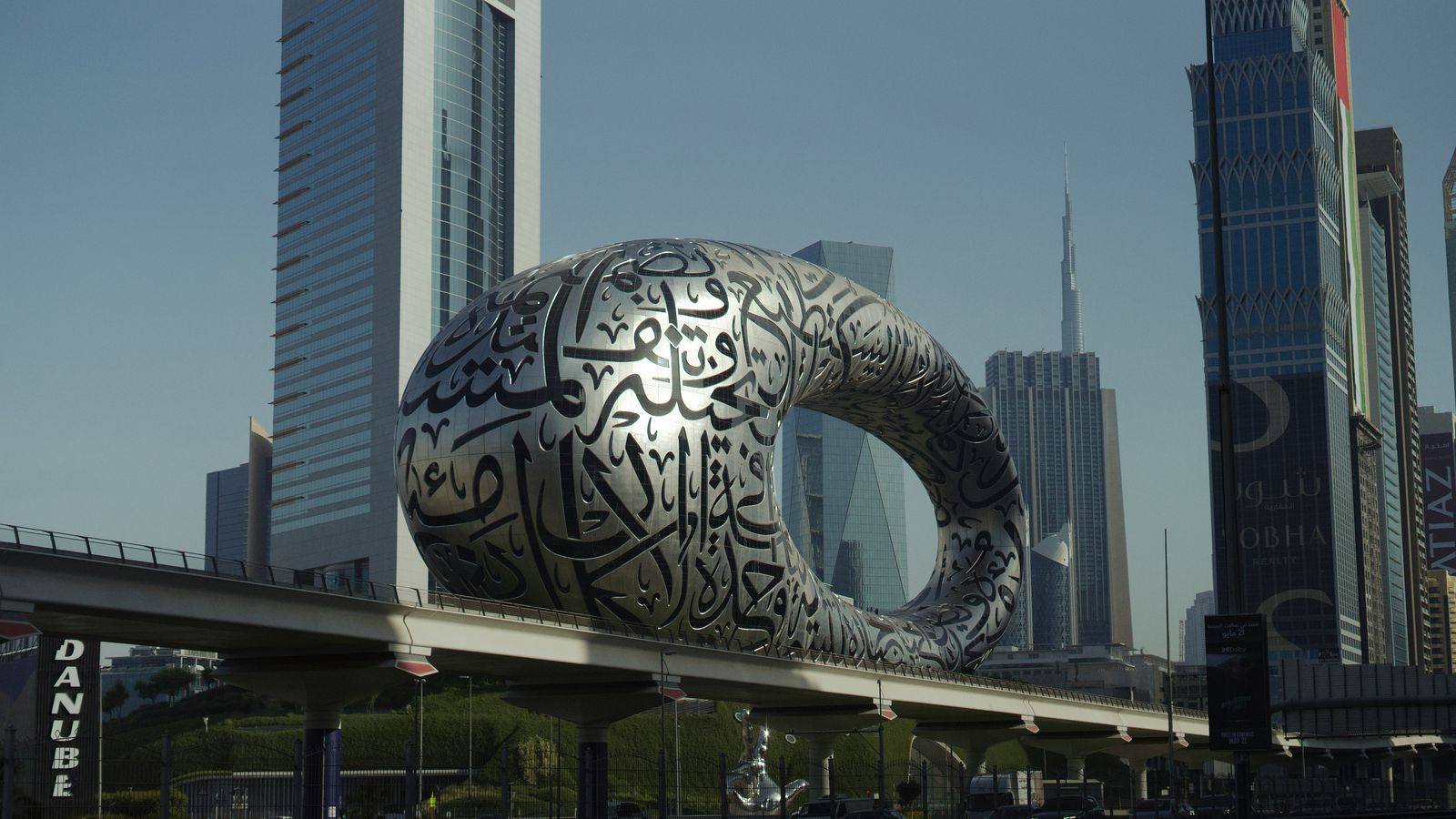
`luxury real estate dubai` rose 30% in UAE search interest in 2026, and the market data explains why: prime is where Dubai's growth actually was.
The 2026 evidence
| Segment | Q1 2026 quarterly price growth |
|---|---|
| Emirates Hills villas | +11.33% |
| Jumeirah villas | +10.31% |
| Business Bay apartments | +1.90% |
| DIFC apartments | +1.87% |
Over the year to April 2026, villas grew 9.86% against apartments' 5.49%.
Prime villa growth ran roughly five to six times prime apartment growth in Q1 2026. That is the single most striking segment divergence in the data.
Prime pricing
| Location | Approx. AED/sq ft, 2026 |
|---|---|
| Palm Jumeirah apartments | ~3,512 |
| Jumeirah | ~3,176 |
| Jumeirah Bay Island | Higher |
| Emirates Hills | Villa/land-value market |
| Downtown Dubai | 2,400–3,000 |
| DIFC | 2,300–2,900 |
| Bluewaters | Premium |
| Branded residences | Substantial premium |
Why prime outperformed: supply constraint
This is the whole explanation, and it is structural rather than cyclical.
Emirates Hills has a fixed number of plots. Palm Jumeirah has a fixed frond count. Jumeirah Bay Island is an island. Jumeirah's beachfront is finished.
No new Emirates Hills is being built. When demand rises against genuinely fixed supply, price is the only variable that can move.
Contrast that with the high-density apartment market, where JVC, Dubailand, Business Bay, Dubai South and Arjan can and do absorb tens of thousands of new units. In those markets, rising demand produces more supply rather than sustained price growth.
The prime segment is the only part of Dubai where supply cannot respond to demand. That is the entire investment thesis, and it is a genuinely sound one.
The relative value argument
Prime Dubai remains inexpensive on a per-square-foot basis against global prime markets — a meaningful fraction of prime London, Hong Kong, New York, Singapore or Monaco.
This "relative value" thesis has driven prime Dubai's repricing since 2021 and it is a real argument. Combined with no property tax, no capital gains tax, a 10-year residency available at AED 2m, and no minimum-stay requirement, the proposition for internationally mobile wealth is genuinely strong.
The caution: relative value arguments have been made about every prime market in the world shortly before they stopped working. Dubai prime is cheap relative to other prime markets. It is not cheap relative to its own history, and the gap has narrowed considerably since 2021.
Treat it as one factor among several, not as the thesis.
What prime buyers are actually buying
Not yield. Emirates Hills, Jumeirah Bay and Palm villas yield poorly — frequently below 4%. Villas overall yielded 4.54% in April 2026 against apartments' 7.08%.
Scarcity. A finite asset in a market with growing demand.
Optionality and mobility. A base in a stable, low-tax, well-connected jurisdiction, with residency attached.
Use. A substantial share of prime buyers occupy the property, at least part of the year. This is a consumption decision as much as an investment one, and it should be assessed as such.
Liquidity in a specific pool. Prime Dubai trades within an international ultra-high-net-worth buyer pool. That pool is small, which cuts both ways: fewer buyers, but buyers who are not price-sensitive in the way mainstream buyers are.
The sub-segments
Palm Jumeirah. The most recognisable. Villas on the fronds, apartments on the trunk and crescent. Apartment pricing around AED 3,512/sq ft. High service charges (AED 25–45/sq ft). Genuinely constrained supply. Strong short-let performance.
Emirates Hills. Dubai's most exclusive villa community. Large plots, golf course frontage, essentially fixed supply. Led Q1 2026 growth at +11.33%.
Dubai's residential price trend
This site's dataset is Dubai residential transactions; it does not track commercial property separately.
Jumeirah and Jumeirah Bay Island. Beachfront and island prime. Jumeirah at roughly AED 3,176/sq ft with +10.31% quarterly growth.
Downtown and DIFC. Urban prime. Apartments, branded residences, penthouses. More liquid than the villa segment, more supply.
Branded residences. A growing segment covered fully in Article 91 — hotel or fashion brand affiliation with associated service standards, commanding a premium.
District One, Al Barari, Dubai Hills prime. Newer luxury communities with more supply than the established prime areas and correspondingly different dynamics.
The risks in prime
Thin liquidity. Fewer buyers means longer sale periods. A prime villa can take six to eighteen months to sell at an acceptable price.
High holding costs. Service charges of AED 25–70/sq ft on apartments; substantial maintenance on large villas with pools, gardens and extensive systems.
Low yield. If capital growth pauses, you hold an expensive asset producing very little. This is the central risk in any low-yield, growth-dependent purchase (Article 19).
Buyer pool concentration. Prime Dubai depends on internationally mobile wealth. That capital arrives for geopolitical, tax and lifestyle reasons and can redirect for the same reasons.
Valuation opacity. Few comparable transactions means wide valuation ranges and more scope to overpay. In a community where six houses sell a year, "market value" is a much looser concept than in a tower where forty units trade.
How to buy in prime
Use a specialist. Prime is relationship-driven. The best assets frequently trade off-market through a small number of brokers with genuine access — boutique specialists, luxury franchises with international referral networks, and firms with demonstrated prime transaction history.
Verify comparables carefully. With few transactions, individual sales carry disproportionate weight in any valuation. Pull everything available on DXB Interact and understand each transaction's specifics.
Commission an independent valuation. At AED 2,500–5,000 on a multi-million-dirham purchase, this is a rounding error and the comparable evidence is genuinely difficult to assemble yourself.
Model holding costs properly. Service charges, maintenance, staffing if applicable, insurance. On a large villa these are substantial and continuous.
Be honest about the purpose. If you will occupy it, it is a lifestyle purchase with an investment component, and that is entirely legitimate. Assess it accordingly rather than constructing an investment case for a decision you have already made.
Common questions
Where is Dubai's luxury property market?
Palm Jumeirah, Emirates Hills, Jumeirah and Jumeirah Bay Island, Downtown, DIFC, Bluewaters, District One and Al Barari.
How much does luxury property cost in Dubai?
Palm Jumeirah apartments ran near AED 3,512/sq ft in 2026 and Jumeirah near AED 3,176/sq ft, with villa markets priced on land value.
Did luxury outperform in 2026?
Yes substantially. Emirates Hills villas grew 11.33% and Jumeirah villas 10.31% quarterly in Q1 2026, against roughly 1.9% for the best-performing apartment districts.
Why does prime Dubai outperform?
Genuinely fixed supply. Unlike the high-density apartment market, prime locations cannot add stock in response to demand.
Do luxury properties yield well?
No. Prime villa yields are frequently below 4% against roughly 7% for mainstream apartments. Prime is a scarcity and capital-growth proposition.
Before you rely on this
Informational only. Not investment advice.
More in Commercial Property
Dubai commercial property in 2026 — the fastest-rising search segment. Office, retail and industrial yields, lease structures, VAT, free zone rules and how to invest.
ReadWhy Dubai's Grade A office market tightened through 2026 — company formation, limited delivery, free zone dynamics, lease structures and what it means for investors.
ReadDubai warehousing and logistics property — the highest-yielding asset class at 8–10%, plus tenure restrictions, specification requirements and where to buy.
Read