
Commercial Real Estate Dubai 2026: Offices, Retail & Industrial
Dubai commercial property in 2026 — the fastest-rising search segment. Office, retail and industrial yields, lease structures, VAT, free zone rules and how to invest.

`commercial real estate dubai` rose 50% year-on-year in UAE search interest in August 2026 — the joint-fastest rise in the entire dataset, alongside `dubai holding real estate` and `dubai real estate prices`. Meanwhile residential brokerage terms declined across the board.
Investor attention is moving from residential brokerage to commercial asset classes. Here is what that market actually looks like.
Why commercial is rising
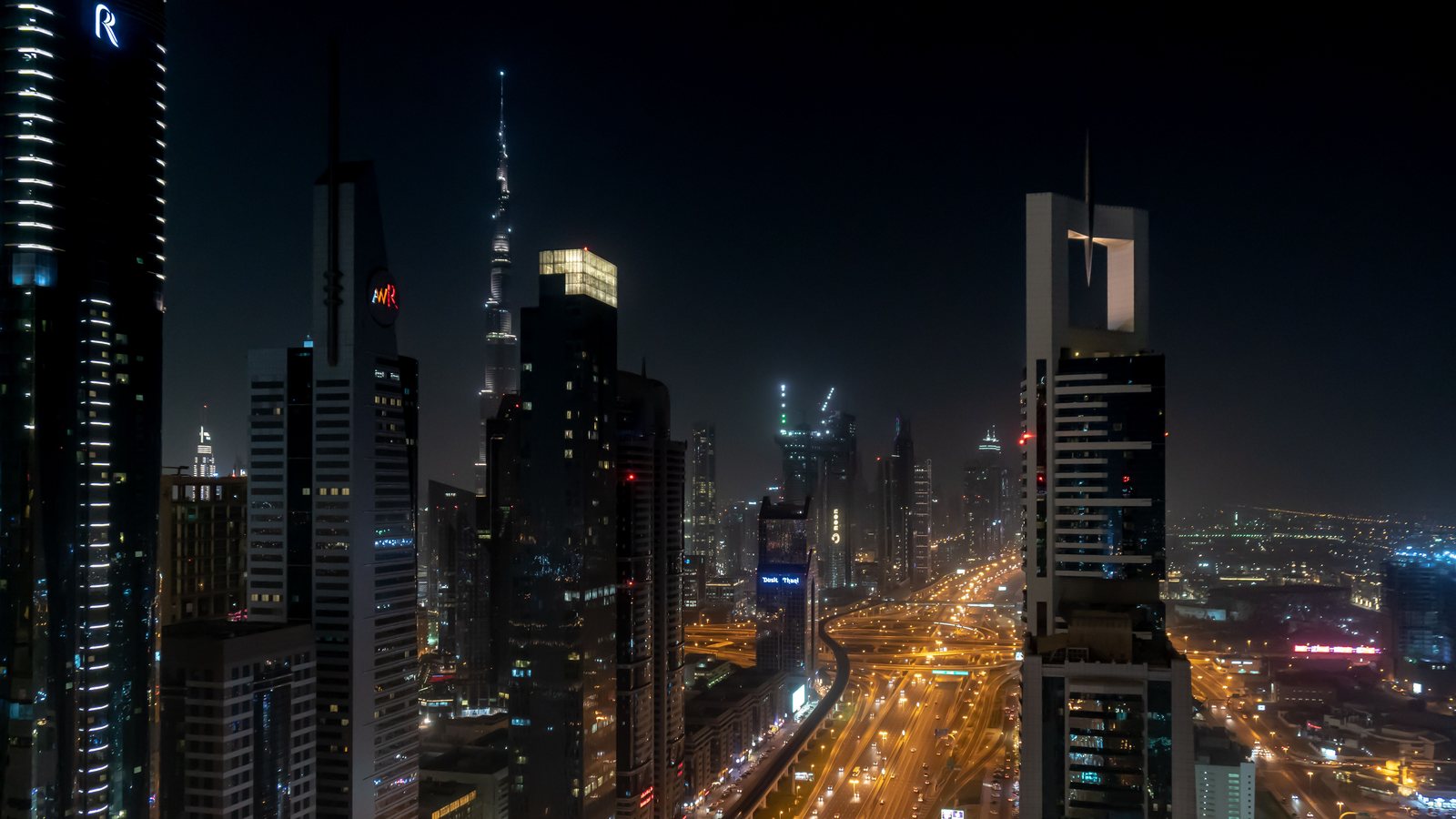
Higher yields. Dubai commercial typically yields 7–10% gross against roughly 6.5–7% for residential apartments and 4.5% for villas.
Genuine office scarcity. Dubai's Grade A office market tightened significantly through 2024–2026 as company formation outpaced delivery. Vacancy in prime districts fell to historically low levels and rents rose sharply — an unusual dynamic in a market normally characterised by abundant supply.
Logistics demand. E-commerce growth plus Dubai's position as a regional distribution hub — Jebel Ali port, Al Maktoum International, DP World — produced sustained demand for quality warehousing.
Less competition. Residential Dubai has several thousand brokerages and enormous retail investor participation. Commercial has far fewer of both.
Institutional migration. The same shift visible in `real estate investment trust` (+20%), `dubai holding real estate` (+50%) and `investors real estate` (+5%). Investors are thinking about asset classes rather than agents.
Offices
Yields: typically 7–9% gross. Entry: AED 1m+.
The 2026 situation: Dubai's Grade A office stock is tight. New company formations — driven by relocations, free zone growth and the D33 economic agenda — outpaced delivery of quality space. Prime districts (DIFC, Downtown, Business Bay, One Central, DMCC) recorded low vacancy and strong rental growth.
Key considerations:
Free zone versus mainland. This is the most important structural point in Dubai offices. A DMCC unit can generally only be leased to a DMCC-licensed entity; a DIFC unit to a DIFC entity. This narrows your tenant pool substantially and it is not obvious from a listing. Mainland offices can be leased to mainland-licensed companies. Establish which you are buying.
Lease lengths are short. One to three years is the Dubai norm, against five to fifteen years in mature markets. This is why weighted average lease expiry (WALE) in Dubai is structurally low, and why core institutional capital has been slower to enter than the yields alone would suggest. More frequent re-letting means more frequent void risk.
VAT applies. Commercial property sales and leases are standard-rated at 5% VAT, unlike residential which is broadly exempt or zero-rated. This affects both your purchase cost and your tenant's cost.
Fit-out. Tenants expect a shell-and-core or fitted specification. Fit-out contributions or rent-free periods are common incentives and are a real capital cost.
Covenant matters enormously. A multinational on a three-year lease and a two-year-old startup at the same rent are entirely different assets. Underwrite the tenant's ability to pay, not just the rent.
Where: DIFC (financial, premium), Business Bay (central, high supply), Downtown (prime), JLT/DMCC (free zone, mid-market), Barsha Heights, Dubai Internet City and Media City (Dubai Holding, sector-specific).
Retail
Yields: 6–9% gross. Entry: AED 1m+.
Community retail — supermarkets, pharmacies, clinics, salons, F&B — within residential master communities has performed well, because Dubai's master-planned communities create genuinely captive catchments.
Mall retail is dominated by institutional owners (Emaar, Majid Al Futtaim, Nakheel) and is rarely available to individual investors.
The dominant risk is tenant concentration. A small retail strip with an anchor supermarket and four small units is largely a bet on the supermarket. If it leaves, the footfall that supports the other four leaves with it.
Underwrite: the catchment population (current and at community completion), competing retail within the catchment, the anchor tenant's covenant and lease length, footfall drivers, and parking.
Industrial and warehousing
Yields: 8–10% gross — the highest in Dubai. Entry: AED 2m+.
The quiet outperformer. Sustained demand from e-commerce, third-party logistics and regional distribution, against limited quality supply.
Attractions:
- Highest yields in the market
- Long leases relative to Dubai norms
- Low management intensity — industrial tenants largely manage their own premises
- Sticky tenants — occupiers invest heavily in their own fit-out, racking and systems, which makes relocation expensive and renewal likely
Constraints:
Dubai's residential price trend
This site's dataset is Dubai residential transactions; it does not track commercial property separately.
- High entry tickets
- Limited freehold availability for foreign individuals. Much industrial land is leasehold or held under musataha, particularly in free zones. Verify the tenure form carefully.
- Thin resale market — fewer buyers, longer sale periods
- Specification matters technically: clear height, floor loading, dock levellers, power supply, yard depth. A warehouse that does not suit modern logistics operations is much harder to let.
Where: Jebel Ali Free Zone (JAFZA), Dubai Industrial City, Dubai South Logistics District, Al Quoz, Ras Al Khor, National Industries Park.
Comparison
| Offices | Retail | Industrial | |
|---|---|---|---|
| Gross yield | 7–9% | 6–9% | 8–10% |
| Entry ticket | AED 1m+ | AED 1m+ | AED 2m+ |
| Lease length | 1–3 years | 3–5 years | 3–10 years |
| Management intensity | Moderate | High | Low |
| Liquidity | Moderate | Low | Low |
| Tenant concentration risk | Moderate | High | High |
| VAT | 5% standard-rated | 5% standard-rated | 5% standard-rated |
| Freehold availability | Varies by zone | Varies | Often restricted |
How commercial differs from residential — the six things to internalise
1. Tenant covenant is the asset. In residential, one tenant leaving is replaced from a pool of thousands. In commercial, your income may depend on one company's solvency.
2. Voids are longer and more expensive. A vacant office can sit for six to twelve months. A vacant apartment sits for weeks. Model void allowances of 10–15%, not 6%.
3. Fit-out and incentives are real capital costs. Rent-free periods and fit-out contributions can consume a year's rent on a new letting.
4. VAT applies. 5% on sales and leases, unlike residential.
5. Financing is different. Commercial mortgages typically offer lower LTVs and shorter terms than residential, at higher rates.
6. Valuation is income-driven. Value = NOI ÷ cap rate. Improving net income — better tenant, longer lease, lower operating cost — directly increases capital value. This is the main controllable value lever and it barely exists in residential.
How to enter the sector
Direct purchase: AED 1m+ for a small office or retail unit; AED 2m+ for warehousing. Requires genuine covenant analysis and, realistically, a specialist adviser.
Listed REITs: Emirates REIT and ENBD REIT provide commercial exposure from a few thousand dirhams, with liquidity and diversification (Article 26).
Specialist advisers: commercial brokerage is a different discipline from residential. CBRE, JLL, Knight Frank, Savills and specialist local firms operate here. A residential agent is not equipped for a commercial underwriting.
The due diligence checklist
- 1Tenure form — freehold, leasehold, usufruct or musataha, and any zone restrictions on who can occupy.
- 2Free zone or mainland, and the resulting tenant pool.
- 3Tenant covenant — trade licence, financials, trading history, group backing.
- 4Lease terms — length, break options, rent review mechanism, repairing obligations.
- 5Passing rent versus market rent — is there positive or negative reversion?
- 6Service charge and operating costs.
- 7Capex requirement over the hold period.
- 8VAT position on purchase and on rent.
- 9Comparable transactions and market yields for the specific sub-market.
- 10Exit buyer pool — who buys this asset in five years?
Common questions
What yields does commercial property in Dubai offer?
Typically 7–9% for offices, 6–9% for retail and 8–10% for industrial and warehousing.
Is VAT charged on commercial property in Dubai?
Yes, 5% standard-rated on commercial sales and leases, unlike residential which is broadly exempt or zero-rated.
Can foreigners buy commercial property in Dubai?
Yes in designated freehold areas, though industrial and free zone property is frequently leasehold or musataha rather than freehold. Verify the tenure form.
Why did commercial searches rise 50% in 2026?
Higher yields, genuine office scarcity, logistics demand and a broader investor shift from residential brokerage toward asset classes.
What's the biggest risk in Dubai commercial property?
Tenant concentration and long voids. A single tenant departure can eliminate the entire income from a small asset.
Before you rely on this
Informational only. Not investment advice.
More in Commercial Property
Dubai's prime and super-prime market in 2026 — where growth actually was, price per square foot by location, supply constraint, and how prime differs from mainstream.
ReadWhy Dubai's Grade A office market tightened through 2026 — company formation, limited delivery, free zone dynamics, lease structures and what it means for investors.
ReadDubai warehousing and logistics property — the highest-yielding asset class at 8–10%, plus tenure restrictions, specification requirements and where to buy.
Read