
Real Estate Companies in Dubai 2026: How the Market Is Structured
The five types of real estate companies in Dubai — developers, brokerages, property managers, portals and consultancies — how they earn, and who represents whom.
There are several thousand licensed real estate companies in Dubai and they do five fundamentally different jobs. Understanding which type you are dealing with — and how each one earns money — explains almost everything about the advice you receive.
The five types
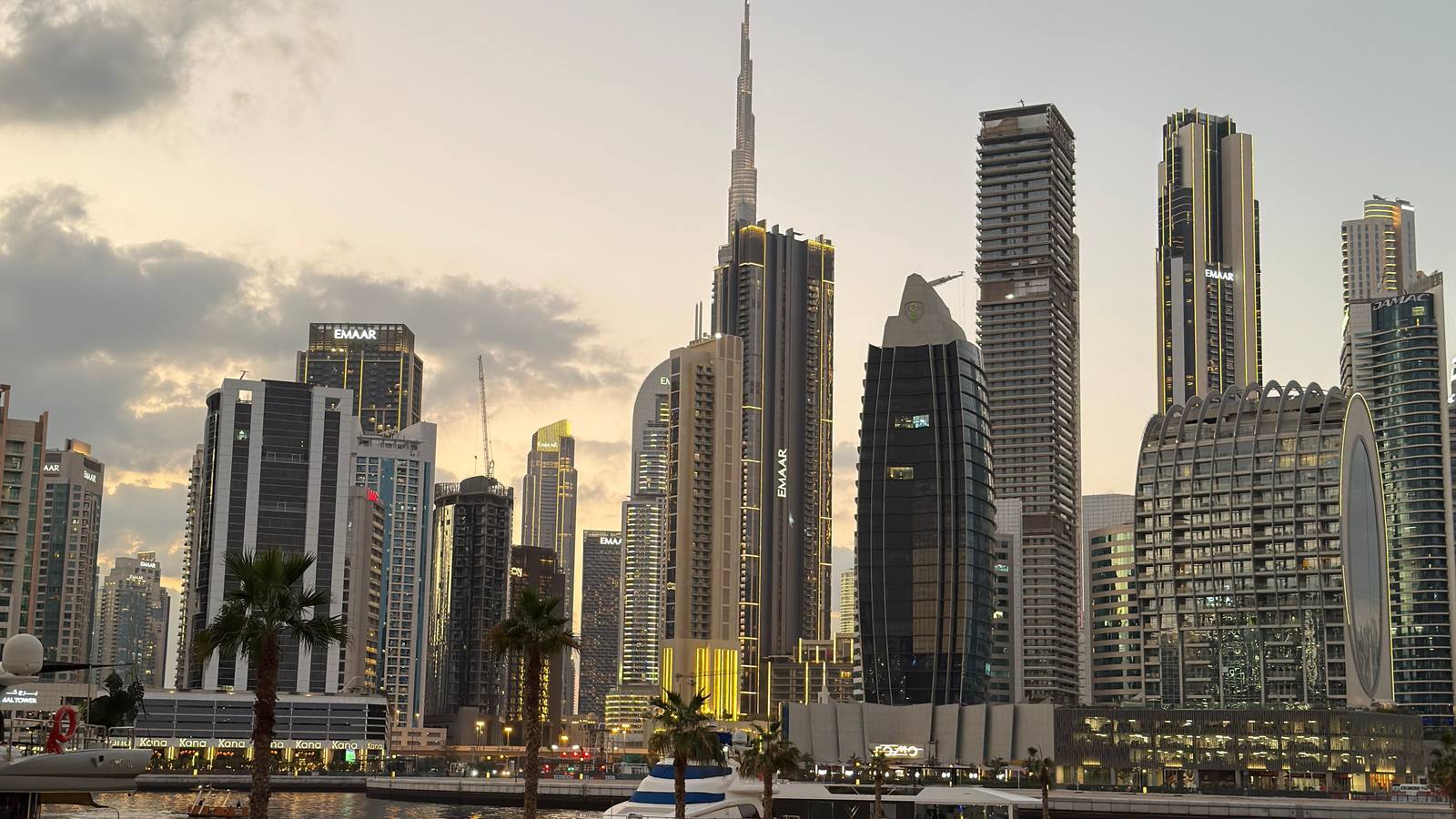
1. Developers. Build and sell property. Emaar, Nakheel, Dubai Holding, Meraas, Damac, Sobha, Danube, Azizi, Binghatti and hundreds of smaller firms. Revenue from selling units they built. They are principals, not agents — they represent themselves.
2. Brokerages. Intermediate between buyers and sellers, landlords and tenants. Betterhomes, Allsopp & Allsopp, fäm Properties, haus & haus, Driven Properties, Metropolitan Premium Properties, Provident, Engel & Völkers, D&B, Luxfolio, and several thousand smaller firms. Revenue from commission.
3. Property managers. Manage let properties on owners' behalf — tenant sourcing, rent collection, maintenance, compliance. Revenue from a percentage of rent, typically 5–8%.
4. Portals. Property Finder, Bayut and dubizzle. Revenue from brokerages paying for listings and promotion, not from buyers or sellers. This matters: the portal's customer is the agent, not you.
5. Consultancies and valuers. CBRE, JLL, Knight Frank, Savills, Cavendish Maxwell, ValuStrat and others. Revenue from fees for research, valuation, advisory and transaction management, predominantly institutional. Their published research is generally the most objective material in the market, precisely because they are not selling units.
How brokerages actually earn
This is the mechanism that explains most agent behaviour in Dubai.
Secondary market (resale): buyer pays 2% + 5% VAT. The agency splits with the agent, commonly 50/50 up to tiered structures reaching 70–80% for high performers.
Leasing: typically 5% of annual rent, paid by the tenant.
Primary off-plan: the developer pays the agent, and the commission is frequently substantially higher than a resale commission — often several percent, sometimes with additional incentives, bonuses and competitions.
The buyer pays nothing on off-plan. That sounds like an advantage. It means the person advising you is paid by the party selling to you.
This single fact explains why off-plan is 70–72% of Dubai's transaction volume, why agents overwhelmingly steer new buyers toward launches, and why secondary off-plan assignments — which pay small commissions and require real work — are barely marketed at all.
None of this is improper. It is a disclosed commission structure. But you should factor it into how you weight the advice.
The regulatory frame
Dubai Land Department (DLD) registers property, maintains the register, collects fees and operates the trustee system.
Real Estate Regulatory Agency (RERA), DLD's regulatory arm, licenses brokers, approves service charge budgets, maintains the rental index and regulates developers and owners' associations.
Every broker must:
- Hold a RERA broker card with a unique broker number.
- Work for a licensed brokerage with a valid trade licence.
- Obtain a Trakheesi permit for every property advertisement, displaying the permit number.
- Use DLD's standard forms — Form A (seller-agency), Form B (buyer-agency), Form I (agency-to-agency) and Form F (the MOU).
Two verification steps that take under five minutes:
- 1Ask for the broker's RERA card number and verify it via the Dubai REST app or DLD's broker search.
- 2Check the Trakheesi permit number on the listing.
An agent who cannot produce a valid broker number is operating illegally. This is not rare.
Company sizes and what they mean
Large brokerages (100+ agents). Betterhomes, Allsopp & Allsopp, fäm, Driven, Metropolitan, haus & haus and similar. Advantages: deep listing databases, developer relationships giving access to launch allocations, professional processes, marketing budgets, and institutional accountability. Disadvantages: variable agent quality across a large headcount, and high-volume pressure.
Mid-sized (20–100 agents). Often specialised by community or asset class. Frequently the best combination of expertise and attention.
Small and single-agent firms. Can offer deep specialisation and excellent service. Also where most compliance problems occur. Verify licensing rigorously.
International franchises. Engel & Völkers, RE/MAX, Century 21, Sotheby's, Christie's. A global brand operating through local licensees. The brand sets standards and provides referral networks; the local operator does the actual work. Quality therefore varies by licensee, and you should assess the local office, not the global brand.
How to tell them apart in practice
Ask one question: "Who pays you on this transaction?"
The market these firms operate in
Unit and building sales, 1 Jan 2026 to 31 Jul 2026 — the transaction volume any Dubai brokerage or portal is ultimately competing for.
- "You do, 2% plus VAT" → secondary market brokerage. Their interest aligns with completing a sale, and they can show you the whole market.
- "The developer" → off-plan. They can only show you developments they have allocation with.
- "The landlord/owner, from the rent" → property management.
- "We charge a fee for the report" → consultancy. Most objective, least free.
Where the market was heading in 2026
The search data shows something interesting. Company-level queries were declining: `real estate companies` −9%, `real estate companies dubai` −8%, `dubai real estate companies` −7%, `real estate agent dubai` −9%, `dubai real estate agency` −20%.
Meanwhile brand-specific queries were surging: PSI and Engel & Völkers both breakout, Rocky Real Estate +170%, SBK +60–80%, Provident +30%, fam Properties +10%, Metropolitan Premium Properties +10%.
Interpretation: the market is consolidating around known names. Searchers have stopped asking "what real estate companies exist in Dubai" and started asking about specific firms. That is the signature of a maturing market where brand recognition is doing the filtering that generic search used to do.
For consumers, that is a mixed development. Brand recognition is a reasonable proxy for scale and compliance. It is a poor proxy for whether the individual agent assigned to you is any good.
What actually determines your experience
Not the company. The individual agent.
A large brokerage employs excellent agents and poor ones. The brand guarantees process, compliance and recourse. It does not guarantee that the person answering your enquiry knows the difference between built-up and net area, or has read the RERA service charge index for the building they are selling you.
Assess the individual: how long in Dubai, how long at this firm, how many transactions in this specific community in the last twelve months, and can they answer the service charge, forward supply and recent-transaction questions without looking them up.
Practical guidance
Use a secondary-market brokerage when buying resale. You pay them, so they work for you.
Understand that an off-plan agent is paid by the developer. Use them for access and information; do your own verification.
Verify the RERA broker card and the Trakheesi permit. Every time.
Read consultancy research — CBRE, JLL, Knight Frank, ValuStrat, Cavendish Maxwell — for market context. It is written for institutions and it is not trying to sell you a unit.
Use portals for search, not for advice. They are advertising platforms funded by agents.
Do not confuse company size with agent quality. Assess both separately.
Common questions
How many real estate companies are there in Dubai?
Several thousand licensed brokerages, plus developers, property managers and consultancies.
Who pays the real estate agent in Dubai?
The buyer pays 2% + VAT on secondary purchases; the developer pays the agent on primary off-plan sales; the tenant typically pays 5% of annual rent on leases.
How do I check a real estate agent is licensed?
Ask for their RERA broker card number and verify via the Dubai REST app or DLD's broker search.
What is a Trakheesi permit?
A DLD advertising permit required on every property listing. Its absence indicates non-compliance.
Are big brokerages better?
They offer better process, compliance and recourse. Individual agent quality varies within any firm, and that is what determines your experience.
Before you rely on this
Informational only. Company names are illustrative of market categories and are not endorsements.
More in Companies & Agencies
A published, checkable scoring framework for choosing a Dubai real estate company — nine criteria, verifiable inputs, and why most "best of" lists are paid placements.
ReadWhat genuinely distinguishes Dubai's top real estate companies — developer allocations, data infrastructure, agent retention and management scale — and how to verify each.
ReadChoosing a real estate company in Dubai depends on what you're doing — buying resale, off-plan, selling, letting or managing. A different firm profile fits each.
Read