
Abu Dhabi Real Estate 2026: The UAE's Fastest-Growing Market
Abu Dhabi property grew 27.8% annually in April 2026 against Dubai's 6.1%. The investment zones, ownership rules, yields, developers and how it differs from Dubai.
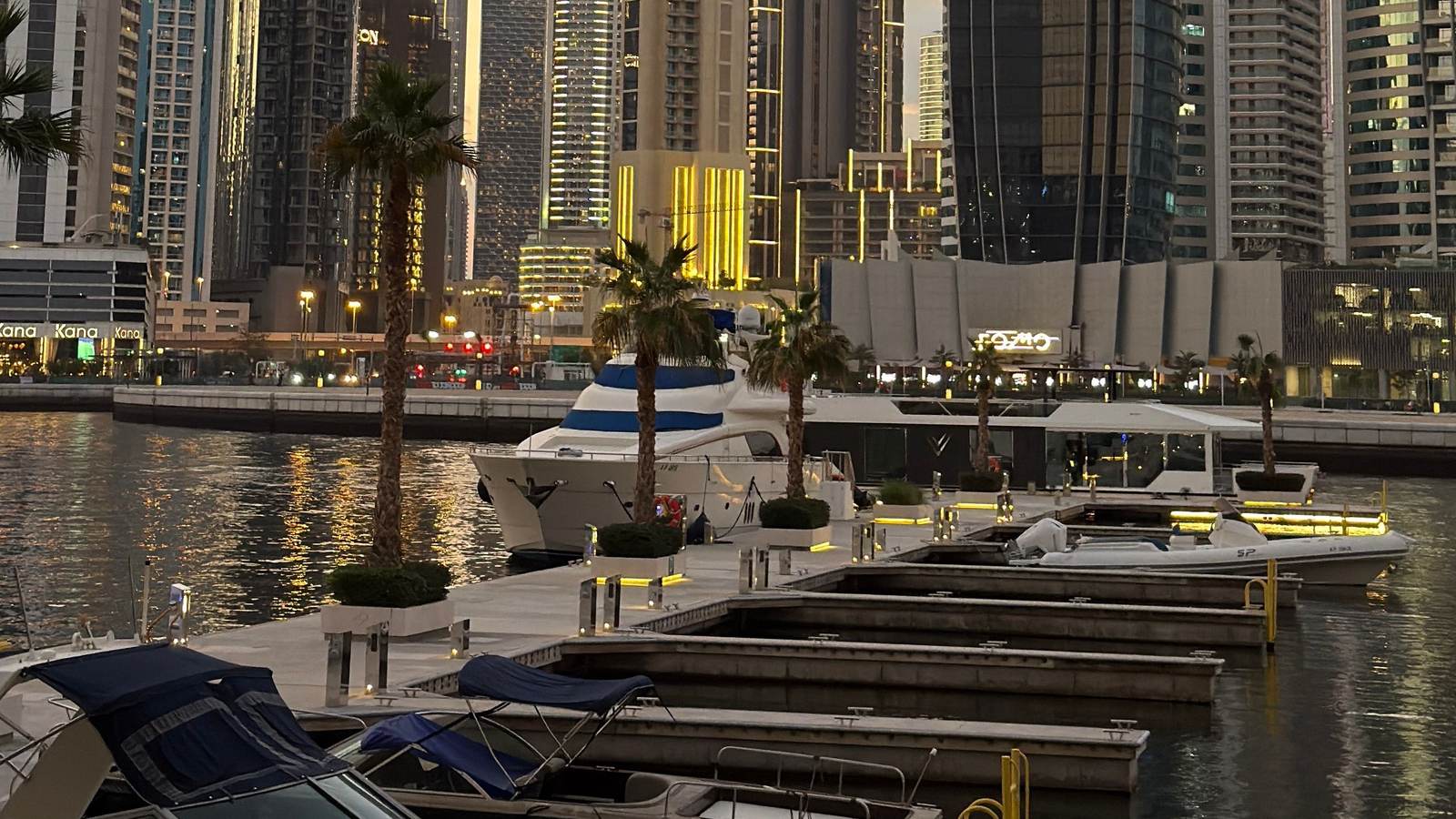
While Dubai dominated the coverage, Abu Dhabi delivered the UAE's strongest 2026 performance by a wide margin.
The numbers

| Metric (Q1–Q2 2026) | Abu Dhabi | Dubai |
|---|---|---|
| Residential transactions, Q1 | ~7,200 | ~45,000–48,000 |
| YoY transaction growth | ~+100% | +4–5% |
| Annual price growth (Apr, REIDIN) | +27.76% | +6.09% |
| Apartments YoY | +31.46% | +5.49% |
| Villas YoY | +7.84% | +9.86% |
| Off-plan share | 81% | 70–72% |
| Ready price/sq ft (Q1, ValuStrat) | AED 1,507 (+25.06%) | AED 1,691 (+5.62%) |
| Off-plan price/sq ft | AED 2,191 (+17.99%) | AED 2,030 (+12.22%) |
| Gross yield | 6.08% | 6.57% |
| Mortgage transactions | ~5,000 (+42.1%) | ~10,800 (+16.1%) |
| Mortgage value | AED 10.05bn (+42.1%) | AED 23.1bn (+13.2%) |
| Annual rental growth (Apr) | +12.0% | +1.5% |
Read the apartment line twice. Abu Dhabi apartments appreciated at more than five times Dubai's apartment rate. Abu Dhabi off-plan traded at a higher price per square foot than Dubai off-plan. And Abu Dhabi rents grew 12% while Dubai's grew 1.5%.
Why it happened
Base effects. Abu Dhabi spent 2015–2022 flat, undersupplied and largely domestic. Percentage gains from a low base are dramatic on modest absolute moves.
Genuine supply constraint. Abu Dhabi's investment zones are geographically bounded and tightly controlled by a small number of government-linked developers — Aldar principally, alongside Modon, Imkan and others. Dubai has dozens of active developers releasing supply into a much larger land bank. Constrained supply plus rising demand produces exactly the price behaviour observed.
Policy catalyst. Law No. 13 of 2019 extended freehold ownership to all nationalities within designated investment zones. Previously, foreigners could only hold 99-year musataha or usufruct rights. That opened a market that had been effectively closed to foreign freehold buyers.
Cultural and economic investment. The Saadiyat cultural district, sovereign-fund-driven diversification, and substantial infrastructure investment created real demand catalysts on a published timetable.
Spillover from Dubai pricing. As Dubai prime pushed past AED 3,000/sq ft, Abu Dhabi waterfront stock at AED 1,500–2,200 began to look like relative value to the same buyer pool.
The investment zones
Foreign freehold in Abu Dhabi is confined to designated investment zones. The main ones:
Saadiyat Island. Cultural district, museums, beaches, premium residential. The highest-profile Abu Dhabi location internationally.
Yas Island. Entertainment-led — Formula 1 circuit, theme parks, Yas Mall, golf. Strong tourism and short-let demand.
Al Reem Island. High-density residential and commercial, close to the city centre, the deepest apartment market in Abu Dhabi.
Al Maryah Island. The financial and commercial centre, home to ADGM. Premium mixed-use.
Al Raha Beach. Waterfront residential, established.
Al Jubail Island. Newer, low-density, nature-focused.
Masdar City. Sustainability-focused development.
Ownership form matters: confirm whether you are acquiring freehold or a long-term musataha/usufruct right for the specific property. Practice varies by project and predates the 2019 reform in many developments.
The regulatory framework
Department of Municipalities and Transport (DMT) oversees the sector.
Abu Dhabi Real Estate Centre (ADREC) regulates and registers, broadly analogous to DLD/RERA in Dubai.
Key differences from Dubai:
Less granular public data. Abu Dhabi publishes materially less transaction-level detail than Dubai, and there is no DXB Interact equivalent. This is the single most important practical difference for an individual investor — you cannot verify prices with anything approaching Dubai's precision.
Fewer developers. Aldar dominates, with a small number of others. This concentrates both delivery reliability and pricing power.
Different fee structure. Registration fees differ from Dubai's 4%. Verify current rates with ADREC.
Different tenancy regime. Abu Dhabi operates its own rent regulation and dispute framework, distinct from Dubai's RERA index and RDSC.
The developers
Aldar Properties. The dominant Abu Dhabi developer, publicly listed. Yas Island, Saadiyat, Al Raha, Alreeman and much else. Delivery record is strong, and its top-performing-agency awards are among the most meaningful broker credentials in the emirate.
Modon Properties. Government-linked, active across residential and mixed-use.
Dubai median price per square foot
Dubai only — this site's dataset does not cover Abu Dhabi or the other emirates.
Imkan Properties. Al Jubail Island and other developments.
Bloom Holding, Reportage and others operate across the mid-market.
Practical implication: with fewer developers, developer selection is a simpler question than in Dubai — but concentration also means the market's delivery and pricing are heavily influenced by a small number of decisions.
The investment case
In favour:
- Genuine supply constraint in bounded investment zones
- Earlier in its cycle than Dubai
- Strong 2026 momentum across prices, rents and mortgages
- More institutional, less speculative buyer base
- Historically lower volatility
- Federal Golden Visa applies — the AED 2m threshold is UAE-wide
Against:
- Far less transparent data. No DXB Interact equivalent; verification is genuinely harder.
- Smaller, less liquid market — ~7,200 quarterly transactions against Dubai's ~45,000
- Fewer developers means concentration risk
- Slightly lower yields than Dubai (6.08% vs 6.57%)
- After +27.8% annual growth, the easy repricing has happened. Buying after a year like that requires a view on what comes next.
- 81% off-plan share, higher than Dubai's, with the same structural implications
How to approach it
Do the work you would do in Dubai, knowing the data is thinner. Where DXB Interact gives Dubai buyers building-level transaction evidence, Abu Dhabi buyers must rely more on agents, developers and consultancy research. That raises the value of a genuinely specialist local adviser — which is part of why an Abu Dhabi-dominant brokerage like PSI (Article 50) has the search profile it does.
Verify the ownership form — freehold, musataha or usufruct — in writing, for the specific property.
Confirm the investment zone and its designation.
Understand the tenancy regime, which differs from Dubai's.
Model the post-surge case. A market that grew 27.8% in a year is not going to repeat that indefinitely. Underwrite on yield and supply, not on extrapolated momentum.
The strategic view
Abu Dhabi in 2025–26 did roughly what Dubai did in 2021–23: a supply-constrained, government-led, investment-zone-driven repricing off a low base.
If that parallel holds, the next phase is continued but decelerating growth as supply responds. If it does not, the constraint is more durable and the repricing has further to run.
Either way, the case for Abu Dhabi rests on supply constraint, not on momentum. Buy where supply genuinely cannot respond, model the income, and treat the 2026 growth rate as history rather than as a forecast.
Common questions
Can foreigners buy property in Abu Dhabi?
Yes, freehold within designated investment zones since Law No. 13 of 2019. Confirm the ownership form for the specific property.
How did Abu Dhabi perform in 2026?
Very strongly — roughly +27.8% annual price growth in April 2026, apartments +31.5%, with transactions up around 100% year-on-year.
What are Abu Dhabi's investment zones?
Saadiyat, Yas, Al Reem, Al Maryah, Al Raha, Al Jubail and Masdar City, among others.
Does the Golden Visa apply in Abu Dhabi?
Yes. The AED 2m property threshold is federal and applies UAE-wide.
Is Abu Dhabi data as good as Dubai's?
No. Abu Dhabi publishes far less transaction-level detail and has no DXB Interact equivalent, making independent verification harder.
Before you rely on this
Informational only. Verify current rules and fees with DMT and ADREC.
More in UAE & Beyond
Who buys Dubai property from abroad, why the capital flows, how cross-border purchase works, and the risks specific to international buyers.
ReadThe northern emirates property markets — Sharjah's usufruct model, Ajman's affordability, RAK's Wynn-driven repricing, yields, and the data problem.
ReadHow Dubai property compares with London, Miami and Singapore on yield, transaction costs, taxes, ownership rights, liquidity and residency — with the real numbers.
Read