
Dubai Investment Real Estate: Choosing an Asset Class in 2026
Apartments, villas, offices, retail, warehouses, hotel units and land — how Dubai investment real estate classes compare on yield, liquidity, management and risk.
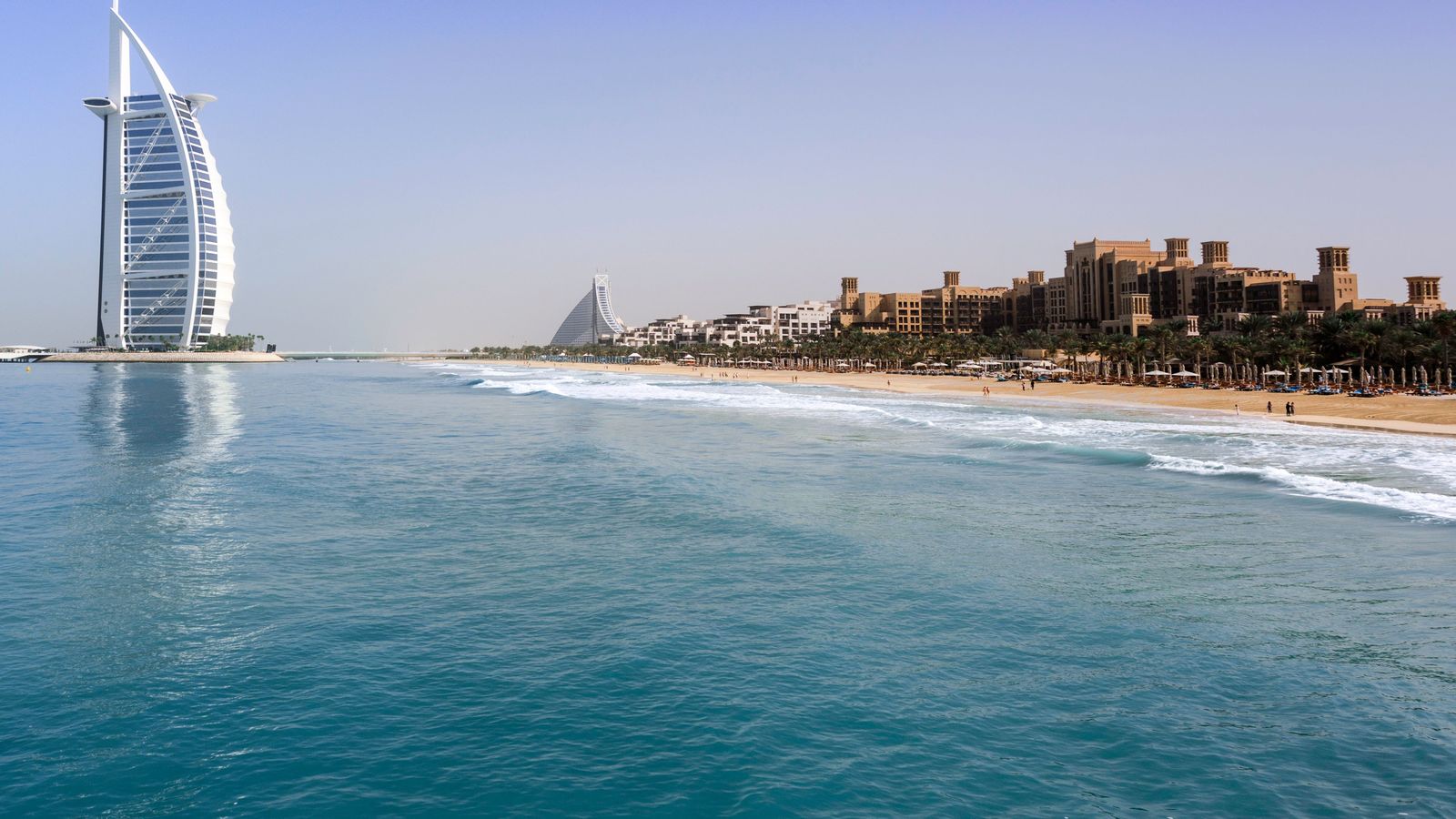
"Dubai investment real estate" usually means a one-bedroom apartment, because that is what is marketed. But Dubai has seven investable property classes, they behave very differently, and the fastest-rising search interest in 2026 was in commercial rather than residential — `commercial real estate dubai` was up 50% year-on-year while several residential brokerage terms declined.
Here is how the classes compare.
1. Residential apartments
Gross yield: ~7.08% (April 2026). Ticket: AED 500,000+. Liquidity: high. Management: moderate.
The default class and the most liquid. Deep tenant pool, deep buyer pool on exit, well-documented pricing via DXB Interact, mortgage financing readily available at up to 80% LTV for resident first-time buyers.
Weaknesses: the highest-supply segment, so pricing power is limited in the mid-market clusters; service charges of AED 10–70/sq ft depending on building; and heavy competition at re-letting.
2. Residential villas and townhouses
Gross yield: ~4.54%. Ticket: AED 1.5m+. Liquidity: moderate. Management: higher (private maintenance, garden, pool).
Lower income, better capital growth — +9.86% annually to April 2026, with Emirates Hills at +11.33% and Jumeirah at +10.31% quarterly in Q1 2026. Supply in established villa communities is genuinely constrained, which is the entire growth argument.
Tenants stay longer (family relocation is disruptive), reducing voids. But maintenance is your problem, not a service-charge line item, and it is more expensive than owners expect.
3. Offices
Gross yield: typically 7–9%. Ticket: AED 1m+. Liquidity: moderate-low. Management: moderate.
Dubai's office market tightened significantly through 2024–2026 as company formations outpaced Grade A delivery. Vacancy in prime districts — DIFC, Downtown, Business Bay, One Central — fell to historically low levels and rents rose sharply.
Considerations: leases are typically one to three years (shorter than international norms, so more frequent re-letting risk); commercial property is standard-rated for 5% VAT, unlike residential; tenant covenant quality matters enormously; and fit-out contributions are a real capital cost.
Free zone versus mainland matters too — a DMCC or DIFC unit can only be leased to entities licensed in that zone, which narrows the tenant pool.
4. Retail
Gross yield: 6–9%. Ticket: AED 1m+. Liquidity: low. Management: high.
Community retail in residential master communities — supermarkets, pharmacies, clinics, F&B — has performed well because Dubai's master-planned communities create captive catchments. Mall retail is dominated by institutional owners (Emaar Malls, Majid Al Futtaim, Nakheel) and rarely available to individual investors.
Risk concentrates in tenant dependency. A single anchor tenant leaving a small retail strip can halve its value. Underwrite the covenant, not the yield.
5. Warehousing and light industrial
Gross yield: 8–10%. Ticket: AED 2m+. Liquidity: low. Management: low.
The quiet outperformer. Dubai's logistics infrastructure — Jebel Ali port, Al Maktoum International, DP World — plus e-commerce growth produced sustained demand for quality warehousing in Jebel Ali Free Zone, Dubai Industrial City, Al Quoz and Dubai South.
Attractions: long leases, low management intensity, tenants who invest in their own fit-out and therefore stay. Constraints: high entry tickets, limited freehold availability for foreign individuals (much industrial land is leasehold or musataha), and a thin resale market.
6. Hotel apartments and serviced units
Gross yield: 6–9% marketed, highly variable in practice. Ticket: AED 800,000+. Liquidity: low-moderate.
Units in serviced buildings, typically operated under a management agreement with an income-pooling structure. Often marketed with "guaranteed returns" for an initial period.
What Dubai investors are actually buying
Dubai records villas and townhouses as buildings and apartments as units; raw land is excluded from every figure on this site.
Read the operating agreement before the brochure. The guarantee period is usually two to five years and is frequently funded from the purchase price — meaning you paid for your own guarantee. What matters is the post-guarantee performance, the operator's fee structure, the definition of distributable income, and your rights if the operator underperforms. Resale liquidity in this class is genuinely poor.
7. Land
Gross yield: zero. Ticket: AED 2m+. Liquidity: low. Management: minimal but not free.
A pure capital-growth and development play. No income, ongoing DLD and municipality obligations, and in many cases development conditions with deadlines. Suitable for developers and high-conviction long-horizon investors, not for income seekers.
Comparison
| Class | Gross yield | Liquidity | Management | Min. ticket | Best for |
|---|---|---|---|---|---|
| Apartments | ~7% | High | Moderate | AED 500k | Income, first-timers |
| Villas | ~4.5% | Moderate | High | AED 1.5m | Capital growth |
| Offices | 7–9% | Mod-low | Moderate | AED 1m | Yield, cycle timing |
| Retail | 6–9% | Low | High | AED 1m | Active investors |
| Warehousing | 8–10% | Low | Low | AED 2m | Yield, long leases |
| Hotel units | 6–9%* | Low | Low | AED 800k | Passive, high caution |
| Land | 0% | Low | Minimal | AED 2m | Developers |
*Marketed; verify post-guarantee reality.
How to choose
Optimising for income and simplicity: ready apartments, or warehousing if your ticket allows.
Optimising for capital growth: villas in supply-constrained established communities.
Optimising for yield and willing to work: offices or community retail, with genuine covenant analysis.
Optimising for passivity: listed REITs (see Article 26) rather than hotel units — the liquidity difference alone justifies it.
The class-agnostic checks
Whatever you buy, four things determine the outcome: supply within the catchment over 36 months, the cost of holding it (service charge, maintenance, management), the depth of the buyer pool on exit, and the durability of the income. A 9% warehouse yield with one tenant on a one-year lease is riskier than a 5% apartment yield with 200 comparable tenants in the catchment.
Yield is compensation for risk. When one class pays three points more than another, find out what you are being paid to accept before you accept it.
Common questions
Which Dubai asset class has the highest yield?
Warehousing and light industrial, typically 8–10% gross, followed by offices at 7–9%.
Which is easiest for a first-time investor?
Ready residential apartments — deepest data, deepest liquidity, easiest financing.
Are commercial properties taxed differently?
Yes. Commercial property sales and leases are standard-rated at 5% VAT; residential is broadly exempt or zero-rated.
Are guaranteed-return hotel units safe?
The guarantee is typically time-limited and often priced into the purchase. Examine post-guarantee performance and the operator agreement.
Before you rely on this
Informational only. Not investment advice.
More in Investing
A full framework for Dubai real estate investment — returns, costs, strategies, risks and the maths that decides whether a deal works. Independent and data-led.
ReadGross yield, net yield, cash-on-cash and IRR for Dubai property — a step-by-step model with real 2026 numbers, including the downside case nobody shows you.
ReadEight ways to invest in Dubai real estate — ready rentals, off-plan, assignments, short-lets, REITs, fractional and more — ranked by risk with expected returns.
Read