
Invest in Dubai Real Estate: 8 Strategies Ranked by Risk (2026)
Eight ways to invest in Dubai real estate — ready rentals, off-plan, assignments, short-lets, REITs, fractional and more — ranked by risk with expected returns.

There is no single way to invest in Dubai real estate. There are at least eight, they carry very different risk profiles, and the strategy an agent recommends correlates strongly with the commission that strategy pays. Here they are, ranked from lowest to highest risk, with honest expected returns.
1. Ready, tenanted, mid-market apartment
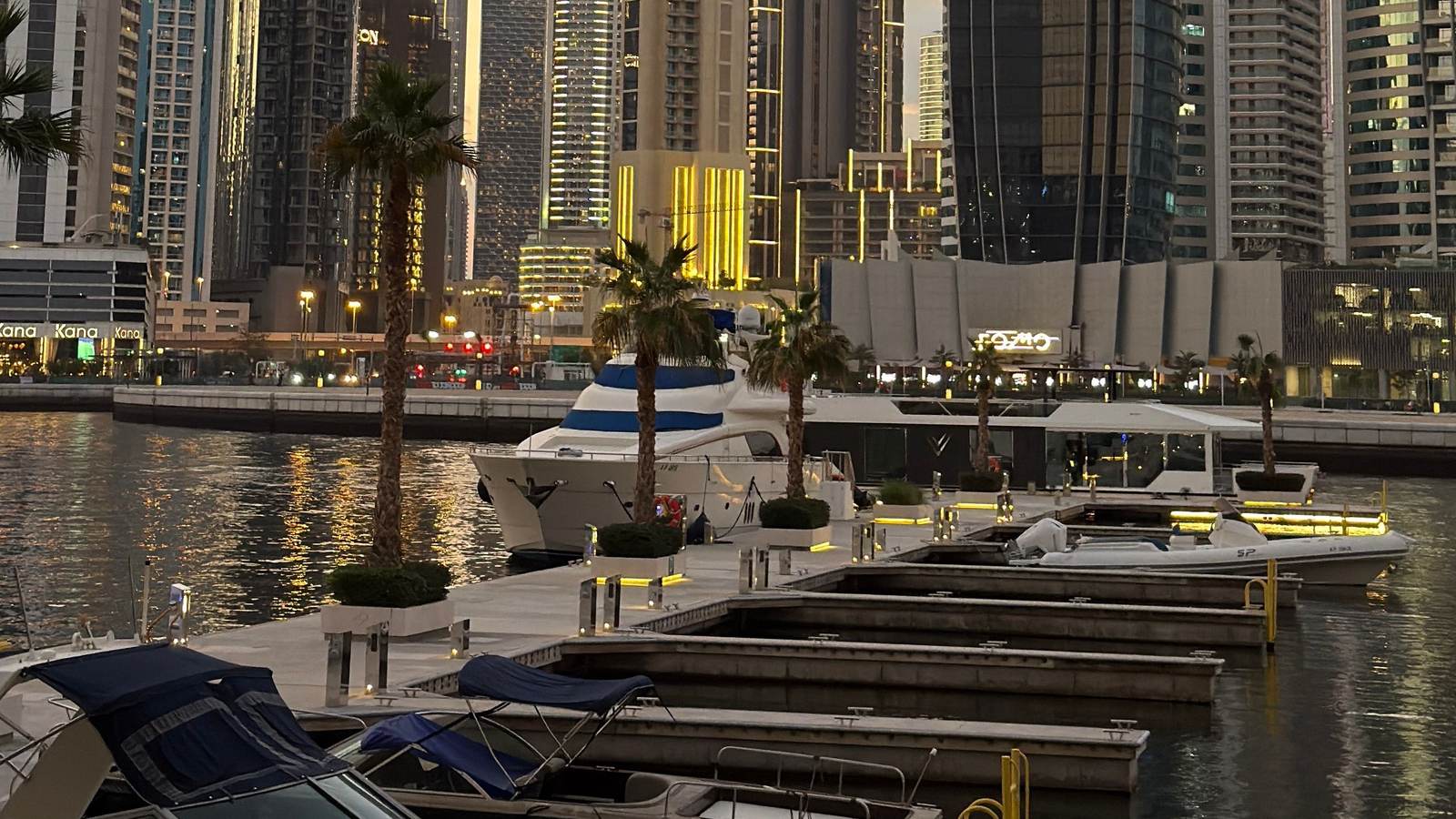
Risk: lowest. Expected net yield: 4.5–5.5%.
Buy an existing apartment with a tenant in place in a community like JVC, Al Furjan, Dubai Sports City or Business Bay. Income starts on day one. Service charge is a known number. Rental history is verifiable. No delivery risk, no handover risk, no construction noise.
The trade-off is that these are the highest-supply communities, so capital growth is modest and you compete with hundreds of near-identical units at re-letting.
Best for: first-time Dubai investors, income-focused investors, anyone who wants to learn the market before taking real risk.
2. Ready villa or townhouse in an established community
Risk: low. Expected gross yield: 4–4.5%; historically stronger capital growth.
Arabian Ranches, The Springs and Meadows, Dubai Hills, Damac Hills, Town Square. Villas grew 9.86% annually to April 2026 against apartments' 5.49%, and Emirates Hills and Jumeirah villas led Q1 2026 at +11.3% and +10.3%.
Lower yield, higher ticket, more resilient tenant base (families move less often, reducing voids), and genuine supply constraint in the established communities.
Best for: capital-growth-oriented investors with larger tickets and long horizons.
3. Secondary off-plan assignment
Risk: low-moderate. Return: depends entirely on entry discount.
Buy an off-plan contract from its original purchaser before handover. A 2023 buyer needing liquidity may sell near their original price while the developer markets identical units in a later phase 20–25% higher.
Requires developer NOC, and typically that the seller has paid a minimum percentage (often 30–40%). Diligence: confirm payments made, confirm no arrears, confirm the NOC fee, confirm the handover schedule has not slipped.
Best for: informed buyers who will do the work. This is where the most consistent value sits and where the least marketing money is spent, which is not a coincidence.
4. Ready prime apartment (Downtown, Marina, DIFC, Palm)
Risk: moderate. Expected gross yield: 5–6.5%; historically strong growth.
Higher entry price, lower yield than mid-market, but deeper liquidity, a more affluent tenant base, better resilience in downturns, and supply constraint in the genuinely prime locations. Palm Jumeirah apartments ran near AED 3,512/sq ft in 2026.
Watch service charges — prime buildings can run AED 30–70/sq ft, which is a permanent drag.
5. Primary off-plan from a tier-one developer
Risk: moderate-high. No income until handover.
Emaar, Nakheel, Dubai Holding, Meraas, Sobha and similar. Payment plans (60/40, 80/20, post-handover schedules) let you control an asset with 10–20% down.
Three real costs: a ~20% per-square-foot premium to ready stock; two to four years of zero income; and market-timing risk — you commit at today's price and hand over into an unknown market.
Escrow legislation protects your funds. It does not protect your entry price.
Best for: investors with a positive multi-year view who value payment-plan leverage over immediate income.
6. Short-term/holiday rental
Risk: high. Gross returns: 8–12%+ in the right location; high variance.
Requires a DTCM holiday-home permit, furnishing capital of AED 40,000–100,000+, active management or a 15–25% management fee, and tolerance for demand seasonality that follows tourism, not tenancy.
Works in Marina, JBR, Downtown, Palm and Business Bay. Does not work in commuter-belt communities. Occupancy of 70–80% at a good ADR beats a long-term let; occupancy of 50% does not.
What Dubai investors are actually buying
Dubai records villas and townhouses as buildings and apartments as units; raw land is excluded from every figure on this site.
This is a hospitality business with a property attached, not a passive investment. Price it accordingly.
7. Primary off-plan from a small or unproven developer
Risk: high.
Frequently the most aggressively marketed segment, with the biggest headline discounts and the most generous payment plans — because the developer is competing for capital against firms with track records.
Escrow protects your money from misappropriation. It does not protect you from multi-year delays, specification downgrades, a weak owners' association after handover, or a resale market that discounts the developer's name.
Non-negotiable check: how many projects has this developer completed and handed over, and what happened to prices in those buildings post-handover? If the answer is "this is their second project," you are taking venture risk at property returns.
8. Launch-day flipping
Risk: speculative.
Buy at launch, assign the contract before handover, capture the appreciation between launch price and later-phase pricing. Genuinely profitable in 2021–2024.
It is a momentum trade dependent on continued price rises and a liquid assignment market, both of which vanish first in a downturn. It is also the strategy most exposed to a rising off-plan share — and off-plan was already 70–72% of the market in 2026.
Everyone who lost money in Dubai in 2008 and 2015 was doing a version of this.
Two indirect routes
REITs. Emirates REIT and ENBD REIT provide listed exposure to UAE income property with liquidity, diversification and no transaction costs. Returns depend on underlying assets and management quality, and Dubai REITs have historically traded at discounts to net asset value. Covered fully in Article 26.
Fractional platforms. Regulated fractional ownership allows entry from a few thousand dirhams. Genuinely lowers the barrier; check regulatory status (DFSA, VARA or DLD-sanctioned), fee structure, and — critically — the exit mechanism, which is usually the weak point.
The risk-return summary
| Strategy | Risk | Net yield | Growth exposure |
|---|---|---|---|
| Ready mid-market apartment | Lowest | 4.5–5.5% | Low |
| Ready villa, established | Low | 3–4% | High |
| Secondary off-plan assignment | Low-mod | n/a until handover | Moderate |
| Ready prime apartment | Moderate | 3.5–5% | Moderate-high |
| Off-plan, tier-one developer | Mod-high | 0% until handover | High |
| Short-term rental | High | 5–8% net | Moderate |
| Off-plan, unproven developer | High | 0% until handover | Very high |
| Launch-day flipping | Speculative | 0% | Extreme |
The practical advice
Start at the top of the list. Most people who lose money in Dubai started near the bottom, because that is where the marketing budget is.
Common questions
What's the safest way to invest in Dubai property?
A ready, tenanted, mid-market apartment with a verified service charge and rental history.
Is off-plan worth it?
It offers payment-plan leverage at a ~20% price premium with no income for two to four years. Suitable for long-horizon investors with a positive market view.
Can I invest in Dubai property without buying a whole unit?
Yes — listed REITs or regulated fractional platforms. Check the exit mechanism carefully.
How much do I need?
Around AED 700,000–800,000 plus costs for an entry-level ready apartment; a few thousand for fractional platforms.
Before you rely on this
Informational only. Not investment advice.
More in Investing
A full framework for Dubai real estate investment — returns, costs, strategies, risks and the maths that decides whether a deal works. Independent and data-led.
ReadGross yield, net yield, cash-on-cash and IRR for Dubai property — a step-by-step model with real 2026 numbers, including the downside case nobody shows you.
ReadApartments, villas, offices, retail, warehouses, hotel units and land — how Dubai investment real estate classes compare on yield, liquidity, management and risk.
Read