
Dubai Retail Property Investment: Community Units & Catchments
How Dubai retail property works as an investment — community retail versus mall, catchment analysis, anchor tenant risk, F&B leases and realistic yields.
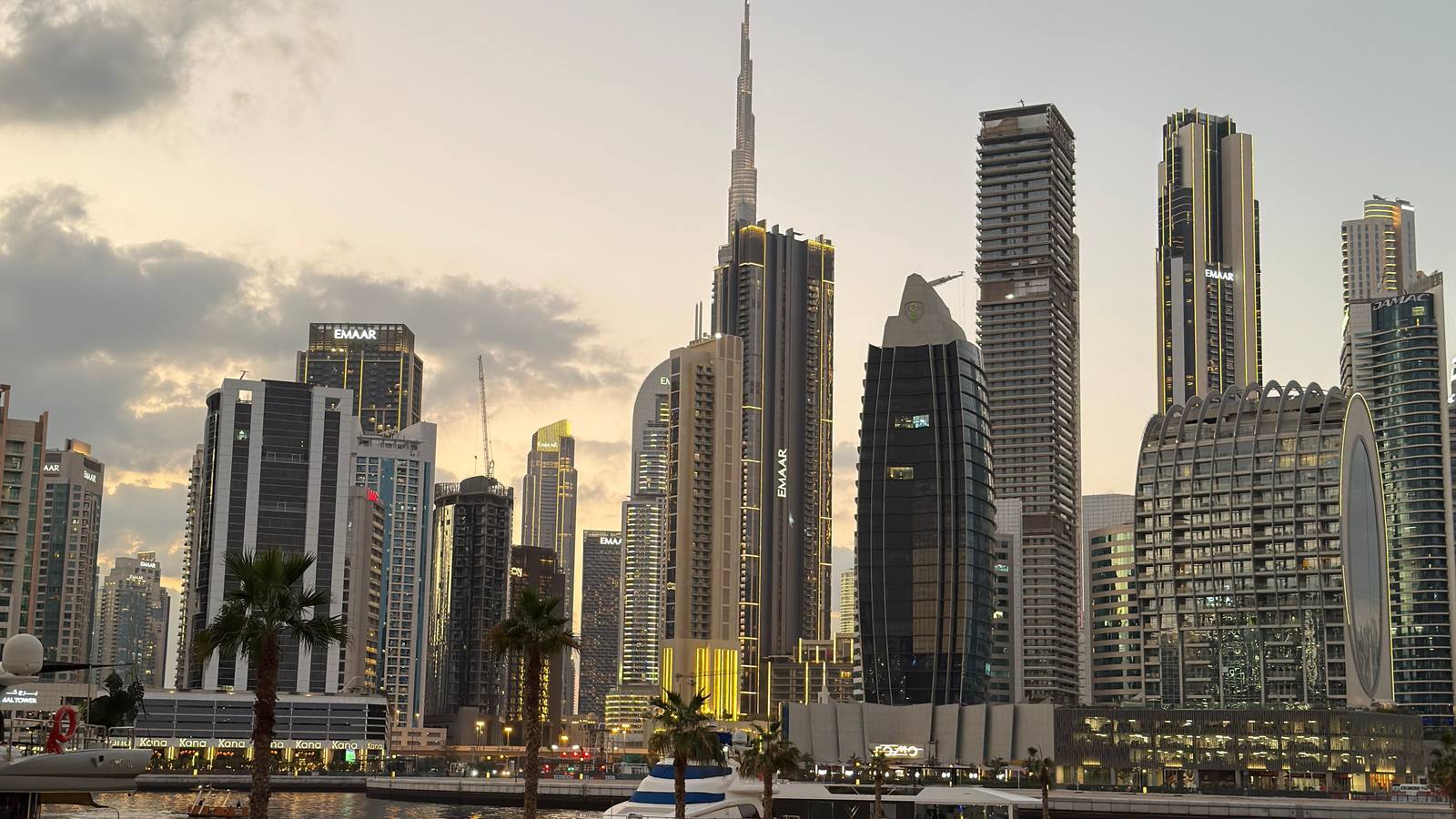
Retail is the most operationally demanding Dubai asset class available to individual investors, and the one where a single decision — the anchor tenant — determines most of the outcome.
The two retail markets

Mall retail. Dominated by institutional owners: Emaar (Dubai Mall and others), Majid Al Futtaim (Mall of the Emirates, City Centre network), Nakheel (Ibn Battuta, Dragon Mart, Nakheel Mall). Individual investors generally cannot access this, and where units are offered they typically come with substantial operational and covenant complexity.
Community retail. Retail units within residential master communities — supermarkets, pharmacies, clinics, salons, laundries, cafés, restaurants, nurseries. This is the accessible segment, with units available from roughly AED 1m.
Why community retail has worked in Dubai
Master-planned communities create captive catchments. A community of 8,000 residents with limited retail alternatives within a reasonable drive generates predictable, repeat demand for daily-needs retail.
Car dependency concentrates spend. Dubai's low walkability outside a handful of districts means residents shop where parking is convenient, which favours community retail within the development.
Population growth. Communities that were half-empty at handover fill over subsequent years, growing the catchment underneath a fixed retail provision.
Limited competing provision. Master developers control retail allocation within their communities, which constrains supply.
The yields
6–9% gross, varying substantially with tenant, lease length and location within the community.
Net yields fall further than in residential, because retail carries higher operating and management costs, longer voids, and periodic fit-out contributions.
The anchor tenant problem
This is the defining risk and it deserves the emphasis.
A community retail strip typically has one anchor — a supermarket — and several satellite units that depend on the footfall the anchor generates.
If the anchor leaves: footfall collapses, the satellite units struggle, and their rents fall or they vacate. A single tenant decision can halve the value of every unit in the strip, including yours.
What this means:
If you are buying the anchor unit: underwrite the covenant seriously — the operator's financials, their store network performance, and the lease length. A long lease to a strong supermarket operator is a genuinely good asset.
If you are buying a satellite unit: you are taking a derivative position on the anchor. Establish who it is, what their lease term is, and what happens to your catchment if they leave.
Ask directly: what is the anchor's remaining lease term? If it is eighteen months, that is your real risk horizon, not the term of your own tenant's lease.
The catchment test
Before any community retail purchase:
1. Current catchment population. How many people live within a five-minute drive today? Not at community completion — today, because that is who generates your rent today.
2. Catchment at completion. How many when the community is fully built out and occupied? And when will that be?
3. Competing retail. What else serves this catchment, and how far away? A large mall four minutes away materially changes the proposition for anything beyond daily-needs retail.
4. Retail provision ratio. How much retail floorspace per resident does this community have? Over-provided community retail is a recognised failure mode — the developer built more space than the catchment can support.
5. Parking. Insufficient or inconvenient parking is a persistent killer of Dubai community retail.
6. Visibility and access. Corner units, main-road frontage and units visible from the community entrance materially outperform interior units.
Dubai's residential price trend
This site's dataset is Dubai residential transactions; it does not track commercial property separately.
7. Trade mix. A balanced mix — supermarket, pharmacy, clinic, F&B, salon, laundry — generates cross-visitation. A strip with four cafés and nothing else does not.
Lease structures
Length: typically three to five years, longer than offices, shorter than industrial.
Rent: usually fixed, though turnover rent (a base plus a percentage of sales) appears in some Dubai retail. Turnover rent aligns interests but requires audited sales reporting.
Fit-out: retail tenants invest substantially in fit-out, which makes them sticky. Rent-free periods to fund fit-out are a common incentive and a real capital cost to you.
Repairing obligations: typically tenant-responsible internally; check external and structural obligations.
Use clauses: define permitted use. Restrictive clauses protect the trade mix; overly restrictive ones limit your future letting options.
The F&B consideration
Food and beverage is the largest and most volatile category in Dubai community retail.
In favour: F&B tenants pay premium rents, invest heavily in fit-out, and drive footfall for the whole scheme.
Against: F&B failure rates are high everywhere, including Dubai. A restaurant that closes leaves a heavily fitted unit that may only suit another F&B operator, narrowing your re-letting pool.
Practical requirements: confirm the unit has adequate kitchen extraction, grease trap provision, power and water capacity, and the necessary municipality approvals. A unit without F&B infrastructure cannot let to F&B, which removes the highest-paying category from your options.
The realistic assessment
Retail requires active management. Tenant relationships, trade mix curation, marketing of the scheme, service charge management, and re-letting. It is not a passive asset.
It suits: experienced investors with local knowledge, a tolerance for concentration risk, and the ability to fund extended voids.
It does not suit: first-time investors, absentee owners, or anyone treating it as an alternative to a residential apartment with a higher yield.
The yield premium over residential is compensation for real, specific risks. Take it only if you can actually manage them.
Common questions
What yields does Dubai retail property offer?
6–9% gross, with net yields falling further than residential due to higher operating costs and longer voids.
Can individuals buy retail units in Dubai?
Community retail within residential developments is accessible from roughly AED 1m. Mall retail is largely institutional.
What's the biggest risk in community retail?
Anchor tenant departure. The anchor generates the footfall that supports every other unit in the strip.
How do I assess a retail catchment?
Current and completed catchment population, competing retail, retail provision per resident, parking, visibility and trade mix.
Is F&B a good retail tenant?
They pay premium rents and drive footfall, but failure rates are high and a heavily fitted F&B unit re-lets to a narrower pool.
Before you rely on this
Informational only. Not investment advice.
More in Commercial Property
Dubai commercial property in 2026 — the fastest-rising search segment. Office, retail and industrial yields, lease structures, VAT, free zone rules and how to invest.
ReadDubai's prime and super-prime market in 2026 — where growth actually was, price per square foot by location, supply constraint, and how prime differs from mainstream.
ReadWhy Dubai's Grade A office market tightened through 2026 — company formation, limited delivery, free zone dynamics, lease structures and what it means for investors.
Read